JACKSON, Miss. – A recent review by Mississippi’s auditor’s office shows students are using their school issued computers for a lot more than homework.
Researchers with Auditor Stacey Pickering’s office reviewed 150 randomly selected school-issued laptops or tablets from nine different school districts and issued a report Tuesday on their findings.
MORE NEWS: From Classroom to Consulate Chef: Culinary Student Lands Dream Job at U.S. Embassy in Paris
According to The Clarion-Ledger:
All nine districts take steps to filter what students might see on the devices, but not all are completely following their own policies, the report said.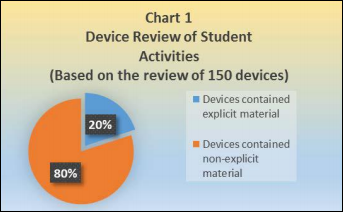
It said 20 percent of the devices contained explicit material. Pickering said the material did not appear to be from mistakes — for example, from someone researching breast cancer and ending up on an explicit website. He said the devices showed “extensive searches” of pornography or other explicit material such as information about how to cure a sexually transmitted disease.
“We have no way of knowing, when they took that laptop home, if it was mama, if it was daddy, if it was older brother, sister, uncle, aunt or that student,” Pickering said. “But we have a good reason to believe, based on the searches and the timing and how the searches were conducted — most of it was conducted by the students.”
All of the results come from school districts that reportedly filter what students can access on the devices, though the report noted that all do not follow their own policies.
The intent of the audit was to assess whether schools comply with the federal Children’s Internet Protection Act. Overall, the audit revealed that 86 percent of computers assigned to middle schoolers, and 82 percent assigned to high schoolers, contained some kind of inappropriate materials, WCBI reports.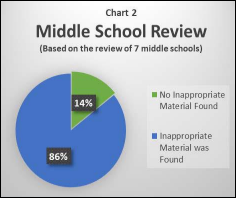
Pickering told the media during a forum at Mississippi State University’s Stennis Institute of Government that his office will not pursue criminal charges for violations, but is recommending that schools step up monitoring on how students use their devices while they’re not at school, according to the Associated Press.
“There’s this assumption that, ‘The school gives my kid this computer. Surely, they’re protecting my kid,’” he said. “The federal government requires it. The question is: Are they?”
MORE NEWS: Know These Before Moving From Cyprus To The UK
According to the report:
The nine districts reviewed did not enforce their Internet Safety and/or Acceptable Use Polices by ensuring the (Technology Protection Measures) were effective while students had access to the Internet. 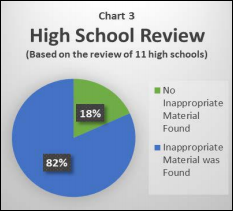
In addition, (the Office of the State Auditor) notes that of the nine districts reviewed, one school district does not maintain TPM filtering when students are off school grounds.
The report goes on to suggest the Mississippi Department of Education establish uniform policies for all districts on how they should monitor students’ computer use on and off school grounds, and to establish “substantial penalties for noncompliance.”
“Districts should monitor individual devices to detect unusual activity, implement security best practices to maintain compliance with regulations, and provide detailed reports to parents to help in the monitoring process,” the report states. “The same security protocols and procedures should be in place while on campus or offsite.
“It is critical to keep students in safe places on the Internet and to closely supervise any open access to the Internet at all times.”


Join the Discussion
Comments are currently closed.