MCINTIRE, Iowa – An Iowa columnist is highlighting one of many issues with school board elections that result in ultra-low voter turnout – and in some cases no voters at all.
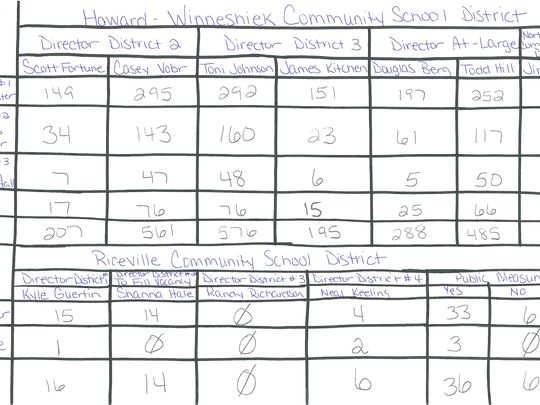
In the Riceville school district, not a single voter cast a ballot for the unopposed school board candidate Randy Richardson, not even Richardson himself, The Des Moines Register columnist Kyle Munson wrote.
The problem is timing, as school board elections are often held during odd times of the year, and in Iowa it’s during the middle of harvest season. That means the 122 registered voters in the predominantly agricultural District 3 don’t have time to cast ballots when there’s hay to be harvested, Munson wrote.
MORE NEWS: From Classroom to Consulate Chef: Culinary Student Lands Dream Job at U.S. Embassy in Paris
Harvest time is what prevented Richardson and pretty much everyone else in his district from making to the polls, he said, and Riceville is far from the only place that experiences this phenomenon.
“The school board president, Karl Fox, is a fellow beef and swine farmer with three kids in school. He outlined a compelling case that a ‘perfect storm’ of demographics and circumstance conspired to make Riceville’s third district a statistical novelty,” Munson wrote.
“The Tuesday after the Labor Day holiday weekend is a horrible time for any election, he said. In a rural area such as this, some people drive 50 miles or more just to get to work. And a community dominated by production agriculture doesn’t just understand the adage (make hay while the sun shines) – local farmers must live it.”
The Register’s editorial board weighed in on the state’s school board election cycle shortly before this year’s ballots were cast.
“Holding important local government elections at the end of summer vacation season has always seemed poor timing. But the Legislature, school officials and county auditors have resisted moving school elections to the November general election ballot” for several reasons, a Sept. 1 editorial reads.
Officials have argued local school issues could get confused with city or county issues, and school board members should have time to prepare a budget once in office.
MORE NEWS: Know These Before Moving From Cyprus To The UK
“Those excuses seem weak, especially when the change would likely increase voter participation. Voters can be trusted to pay attention to issues involving cities, counties and schools at the same time without causing their brains to explode,” according to the editorial.
A change to a November ballot could also cause jurisdictional issues because city, county and school district boundaries overlap, and lawmakers seem to have no appetite to resolve the issues that creates, it continues.
But there’s another reason – repeatedly cited by education reformers – for the reluctance to get more voters involved in school board elections: it’s much easier to steer an election with low participation.
Local teachers unions across the country use that to their advantage by motivating their members to cast ballots in school board races, which obviously tips the scales in favor of the union’s chosen candidates. Those candidates, of course, are quite appreciative of the help when it comes time to negotiate collective bargaining agreements with those who helped to elect them.
It’s a vicious cycle that plays out in school board elections in most states.
In Iowa, the problem is obviously exacerbated by the harvest season, undoubtedly by design.
And while Riceville board president Fox points out that local residents care deeply about the education system, citing the town’s ability to raise $750,000 to help the small district just a few years ago, the zero voter turnout in Richardson’s district illustrates the political system isn’t designed to give them a real voice.
And that’s not likely to change unless voters demand it.


Join the Discussion
Comments are currently closed.